W6SD – Serving ‘Ham’ Radio Hobbyists
In the San Fernando Valley For 80 Years
W6SD, the San Fernando Valley Amateur Radio Club, is celebrating the 80th anniversary of its founding in 1946.
The club, one of the oldest amateur radio clubs in the nation, was formed primarily by veterans of World War II who during their military service had honed skills in radio communications using voice and Morse Code.
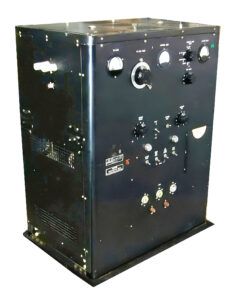
Photo courtesy RadioMuseum.org
They were drawn to the Valley by jobs with companies like Lockheed, North American Aviation, and Hughes Aircraft, and used GI Bill loans to buy some of the thousands of homes that were springing up in vast tracts.
The influx of these young men and women contributed to an enormous influx of residents to Los Angeles and its suburbs. The Valley’s population surged from about 155,000 in 1940, just before America entered the War, to over 403,000 a decade later.
The Valley almost seemed to be designed for hams. Their new homes had backyards that could accommodate radio antennas, and garages perfect for tinkering. The marketplace was flooded with inexpensive, easily converted military surplus radios such as the Signal Corps’ BC-610, which grateful soldiers had dubbed “The Voice of Victory.”
Documentation of the Club’s early years is sparse. Its formal paperwork was filed with the state on October 2, 1946, with Hans R. Jepsen, W6KEI, as a key organizer. Others active in the initial years were Arthur M. Gentry, W6MEP; Milford Nelson, W6TNR; H.O. Phillips, W6MEQ; and George C. Morey, W6TNQ.
In 1956 Mr. Gentry built one of the nation’s first amateur radio repeaters in Northridge, to enable radios with weak signals to reach distant receivers. The repeater, which used war surplus gear, went on the air in 1956 with the call sign K6MYK. Relocated to the Hollywood Sign area in 1958, it is still on the air as W6MEP and is one of ham radio’s oldest continuously operating repeaters.